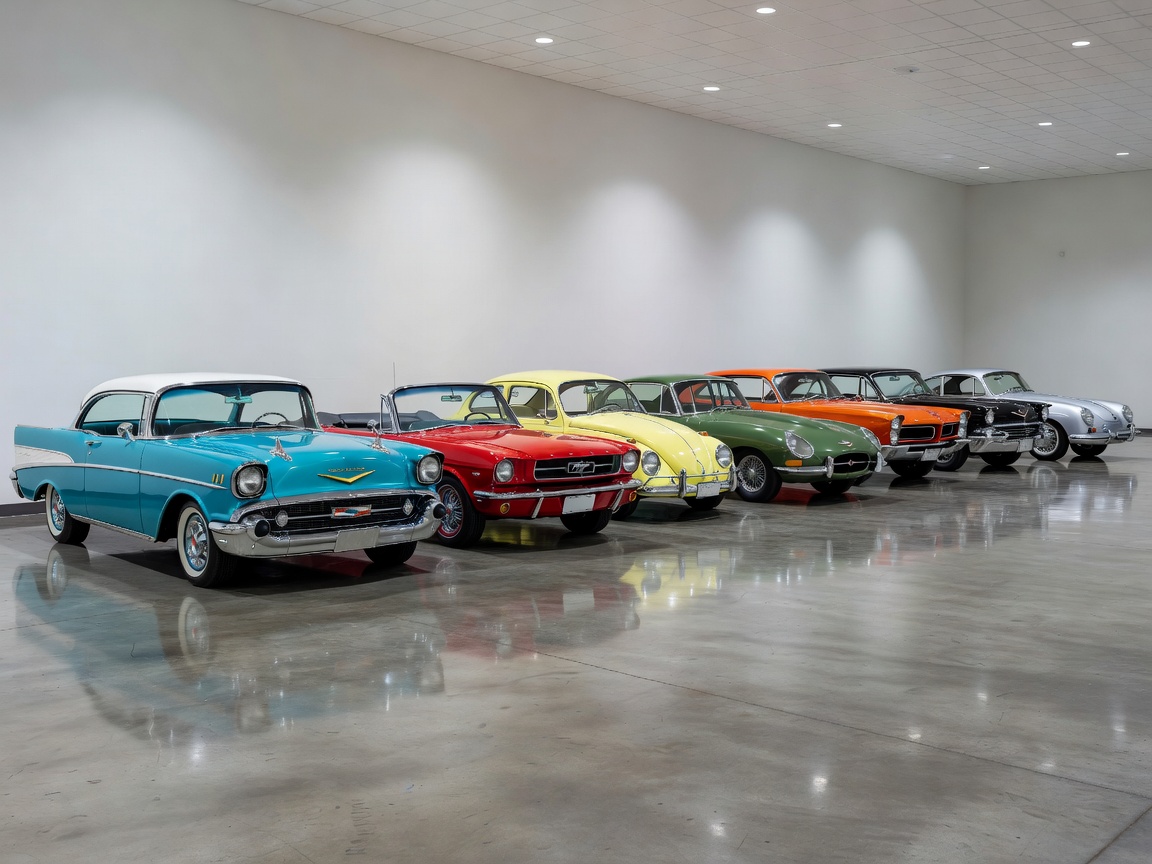
Collections have a point of view
Some collections concentrate on a marque, a production period, a body style, a technology or a local story. Others combine vehicles through personal interest or availability. The theme determines what belongs in the collection and how objects relate to each other. When the theme is clear, visitors can follow a thread across design changes, engineering choices and cultural use.
A marque-focused collection may trace generations of products and show how a manufacturer responded to changing materials, regulations or customers. A period collection can compare cars from different makers within a shared moment. A use-based collection might bring together family transport, commercial vehicles or competition machinery. Each approach offers a different comparison. No single format is inherently more valuable as historical interpretation.
Ask whether the selection has a stated rationale. A useful introduction explains what the collection covers, what it excludes and how vehicles were acquired or selected. The answer helps visitors judge the display without relying on quantity or visual polish.
Preservation and restoration are different aims
Preservation aims to retain surviving material and prevent further deterioration. Work may stabilize a vehicle, protect a finish or maintain a component without returning it to a newly completed appearance. The object’s age and signs of use can remain part of its evidence. Preservation still involves decisions; neglect is not the same as conservation.
Restoration involves intervention intended to bring a vehicle or component toward a defined earlier state. The scope can range from a limited repair to extensive work across structure, mechanics, finish and trim. A restoration can improve legibility and presentation, but it may remove or replace historic material. Good records make the choices visible.
These terms are sometimes used loosely. Ask what work was carried out, when, by whom where documented, and which parts are original, repaired or replaced. A bright finish alone cannot answer those questions. Nor does an aged surface prove that a vehicle is untouched.
Originality, provenance and records
Originality describes the relationship between a vehicle’s present components and its earlier configuration. It is not a simple all-or-nothing label. A vehicle can retain significant original parts while having received later maintenance items or safety-related work. Claims need scope and evidence. Exhibition labels, catalogues and archive records should make clear when information is incomplete.
Provenance records the history of ownership, custody and documented use. It can connect a vehicle to people, places and events. Registration papers, service records, photographs, correspondence and restoration files may contribute, but every document has limits. A dated photograph can establish that a vehicle existed in a particular form at a particular time; it does not automatically prove every later claim.
Documentation matters because it preserves decision history. It helps future caretakers distinguish known facts from assumptions, understand replaced components and avoid repeating invasive work. A record can be useful even when it contains gaps, provided those gaps are acknowledged.
Storage and presentation
Storage affects condition and access. A collection may keep vehicles in a public gallery, a working space, a private facility or several locations. Public presentation allows direct comparison but can expose objects to light, dust and visitor contact. Controlled storage may support care while limiting public access. The right balance depends on the collection’s resources, conservation needs and purpose.
Display choices also shape meaning. Vehicles placed by era invite a chronological reading. A group arranged by body or use encourages comparison. Supporting photographs, components and documents can help visitors read details that are difficult to see on a complete vehicle. Clear labels should identify what is known and avoid implying that every object is in running condition.
Questions for a collection visit
- What theme connects the vehicles?
- Are acquisition history and provenance explained?
- Does the display separate surviving material from later restoration?
- Are gaps in the record acknowledged?
- Can visitors access the collection, or is prior arrangement required?
Use official information to confirm public access, current displays, photography rules and visitor requirements. A private collection may be visible by appointment only, may have restricted access or may not accept visitors. Plan around confirmed arrangements rather than assuming availability.
Good for
Visitors interested in how vehicles are selected, cared for and interpreted. It is especially useful for comparing marque-focused displays, period groupings and collections built around a particular use or preservation approach.
What to know
- Preservation retains evidence; restoration changes or renews material toward a chosen state.
- Originality and provenance require specific supporting records.
- No market value or authenticity conclusion can be inferred from display appearance alone.
Related reading
For institution types and interpretive scope, read Scandinavian Car Museums. The heritage and restoration guide explains intervention terminology. Use the exhibition guide to assess presentation.
NEXT ACTION / DOCUMENT